


 0845 8623840
Insights
iON Supports the HSE’s Asbestos Analysis Mystery Shopper Project
Date: 07/05/26
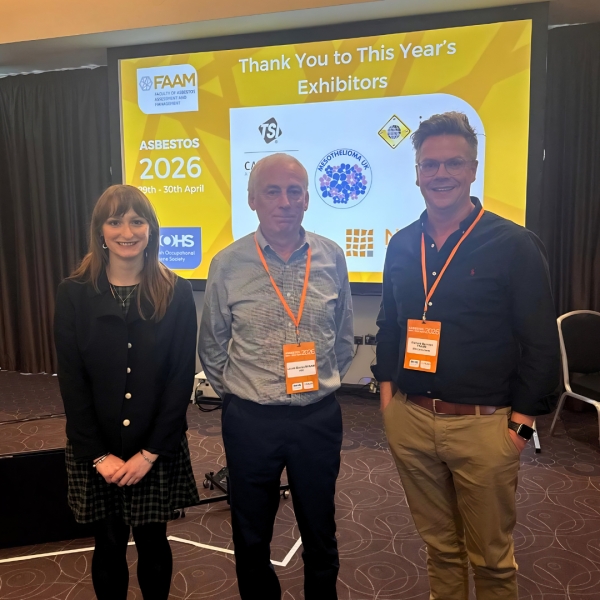
The Health & Safety Executive (HSE) commissioned iON Consultants to support a landmark mystery shopper project to evaluate the standard of bulk asbestos analysis in the UK. Selected for our credibility and independence, we worked alongside the Fibres & Minerals Team at the HSE Science and Research Centre in Buxton to verify the performance of UK asbestos laboratories handling samples as part of the Asbestos In Materials Scheme (AIMS). The project revealed several concerning findings.
AIMS is an inter-laboratory proficiency testing scheme designed to ensure that laboratories can accurately identify asbestos types in a wide variety of products, including insulating board, insulation, vinyl flooring, and cement products. In regular evaluations of how accurately a laboratory identifies asbestos types in test samples, the HSE’s results were consistently very good. In its most recent analysis – AIMS Round 87 – 88% of laboratories achieved a good performance rating, while the remaining 12% were scored as acceptable. The HSE Fibres & Materials Team commissioned a “blind” analysis by a “credible consultancy” to verify the authenticity of the reported performance, ensure the integrity of laboratory processes, and examine what occurs when laboratory staff believe they are not under scrutiny.
Five scenarios were outlined at the start of the project that could potentially justify the laboratories' consistently strong performance:
- The analysts are technically competent.
- The analysts know they are analysing AIMS samples.
- The analysts spend more time analysing AIMS samples.
- The samples are too easy.
- All the above.
As a credible third-party consultancy, we were selected to handle sample despatch and anonymise results. Peter Cottam, Operations Director at iON Consultants, led the project. He and his team randomly selected laboratories in England, Scotland and Wales on the UKAS website, sent sample batches, and paid for the analysis. No reference to the HSE was made during any part of the process. We anonymised and returned the results of the analysis and the cost per sample. The findings were astounding.
The HSE’s mystery shopper results revealed significant issues, with only 22% of laboratories scoring a good rating and an incredible 78% being unsatisfactory – a marked difference compared to the original results.
- Sample 1 – 25% of the laboratories failed to detect chrysotile.
- Sample 2 – Only 24% of the laboratories detected all asbestos types. 15% failed to recognise crocidolite; 75% missed amosite; 14% did not identify crocidolite and amosite.
- Sample 3 – All laboratories reported as NAD (correctly). Only 7% reported the sample as deviating.
- Sample 4 – 86% of the laboratories identified chrysotile in the tile and bitumen. 12% found the chrysotile only in the tile. 2% did not identify chrysotile in the tile or adhesive.
Although the results, with one exception, correctly identified the presence or absence of asbestos, a key element was missed that could have affected the material assessment score in some cases. This omission could result in incorrectly categorising risks based on unidentified asbestos fibre types in the sample analysis. This would lead to the algorithms creating the incorrect score for the asbestos product and ultimately affect the risk banding of a material.
Notably, most laboratories did not identify Sample 3 as being outside the expected size. An astonishing 93% failed to recognise that the small sample size was inadequate. Insufficiently sized samples of textured coatings can increase the risk of asbestos going undetected. This oversight could have major implications in practice, particularly given its non-homogeneous dispersion within this type of material.
Commenting on the findings, Peter said:
“Alarmingly, the results produced by the mystery shopper initiative differ significantly from those of the AIMS scheme. They demonstrate a clear distinction in the laboratories’ approach to customer and proficiency scheme samples.”
The HSE's mystery shopper project identified multiple failings, raising suspicions about the quality of the results received by the AIMS scheme. In proficiency-based scenarios, there appears to be a heightened state of quality review. In customer-facing situations, there is a failure to identify all fibre types, escalate issues, or call out inadequate sample sizes. Both outcomes reveal a lapse in quality judgement and gaps in the underlying quality control processes that could be improved.
Peter continued:
“The results indicate a misalignment in quality practices: laboratories demonstrate heightened scrutiny in proficiency-based assessment yet fail to apply the same rigour when dealing with customer samples where risk identification is critical. I hope that this exercise will allow laboratories to undertake some self-reflection and quickly work to eradicate inconsistencies and improve standards to ensure that this crucial part of the industry is fit for purpose.”
As an independent and impartial consultancy, we were proud to support the enforcing authority on this significant project. The findings expose gaps in core competency and due diligence, shortcomings that are unacceptable when they contribute to conditions in which lives may be put at risk. They also underline the importance of rigorous oversight, transparent processes, and the confidence to challenge issues as they arise.
While the results are deeply concerning, they reinforce the importance of the role we play in supporting our customers and the wider public. We work closely with dutyholders to ensure they receive a quality service from their suppliers that they are entitled to and can rely on. We will continue to expose risks, challenge inappropriate practices, and promote stronger, more reliable outcomes without bias toward context or stakeholders. We remain committed to transparency and to helping our customers navigate risk management with clarity and integrity.